


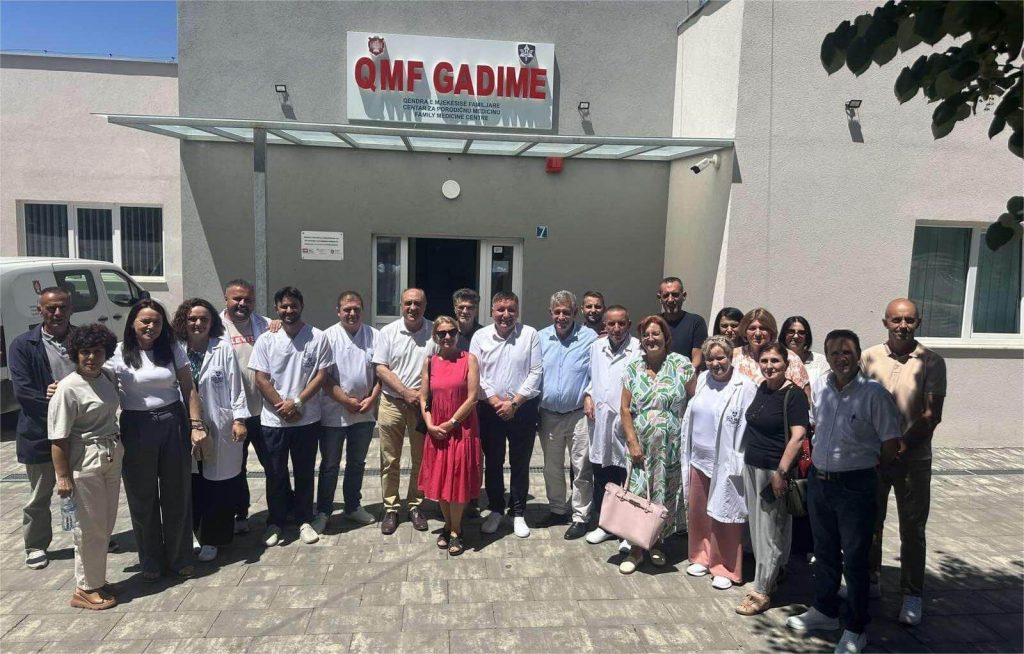
Over the past two months, five exchange visits have brought together healthcare professionals from across Kosovo aimed to learn from one another, share innovative practices, deepen collaboration, and improve the quality of primary healthcare services.
Hosted in Lipjan and Gjakovë, both demonstration sites in Primary Healthcare (PHC) and supported by the Accessible Quality Healthcare (AQH) project, the visits included professionals from more than 12 municipalities. Each visit focused on the role and function of the Health Educational and Promotional Rooms, known as Health Resource Centers (HRC), within Main Family Medicine Center (MFMC), especially in supporting patients with non-communicable diseases (NCDs) like hypertension and diabetes. Visits took place also in Gadime, a village in the municipality of Lipjan showcasing how also the Family Medicine Centers (FMCs) can successfully host HRCs, inspiring similar initiatives in other rural and decentralized PHC structures.
These exchanges gave family doctors, nurses, quality coordinators, and health directors the chance to see firsthand how new, patient-centered approaches are being applied, and to share their own experiences in return.
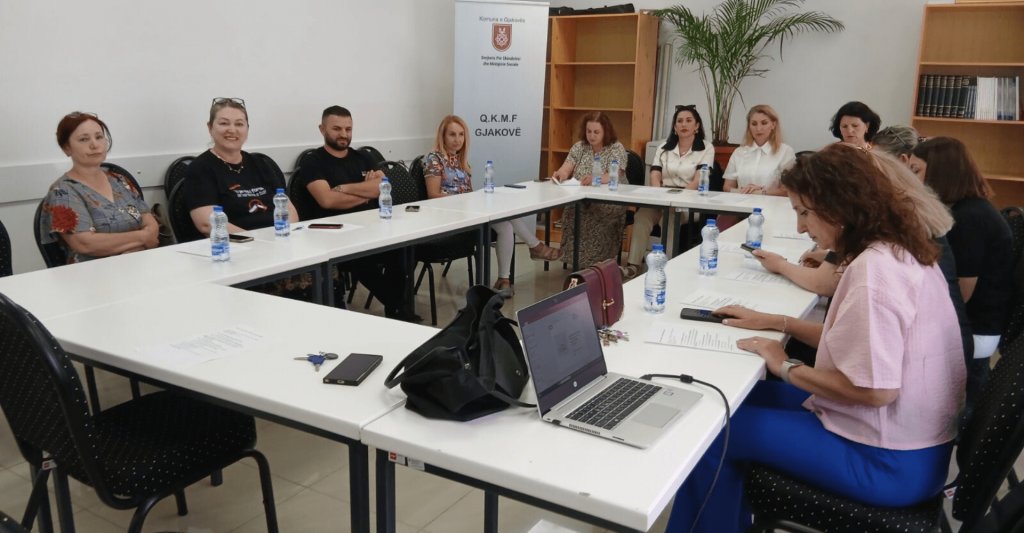
In Gjakova, one of the host municipalities, the team presented how their advisory services through the HRCs are helping patients take better care of their own health.
“These visits are very important for us as a demonstration site,” said Violeta Xerxa Thaqi, a healthcare professional from Gjakova. “We were able to show the progress we’ve made and how we involve patients more in managing their conditions. At the same time, we gained a lot from the feedback and ideas of our colleagues.”
The visits created space for open discussions about what works, what doesn’t, and how different municipalities are navigating similar challenges.
Dr. Rushiti Ismaili from MFMC in Prishtina stressed the value of seeing things firsthand. “We read reports, of course,” he said, “but in this dynamic time where everything is happening at once, it’s hard to really absorb the details. It’s a completely different feeling when you actually visit a center, see how things are set up, compare with your own facility, and speak directly with the people behind the work.” He added that even when opinions differ, these exchanges help professionals understand how others are solving similar challenges.
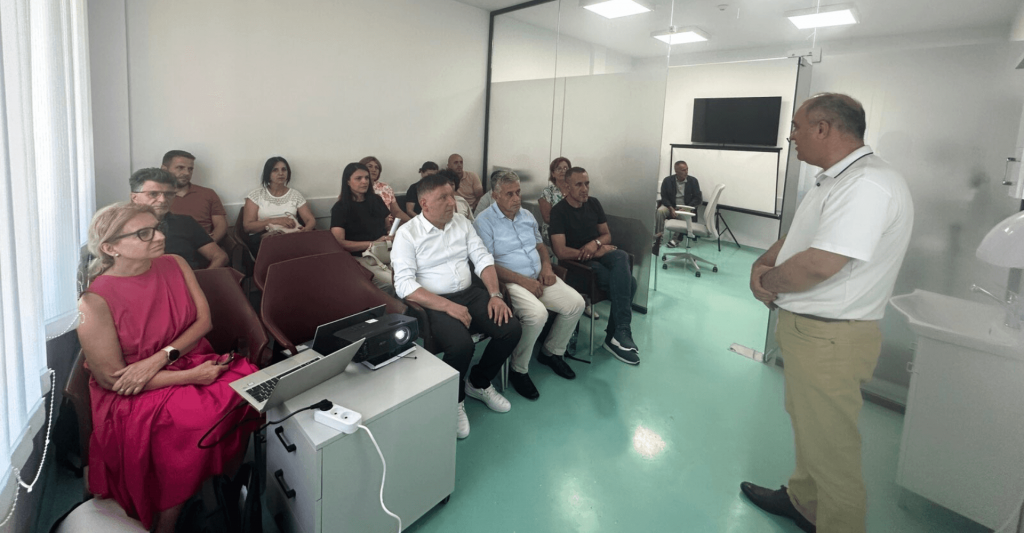
The exchange visits also sparked interest in future collaborations. Several municipalities expressed enthusiasm about organizing reciprocal visits and learning from each other’s models. Participants suggested visiting Gjilan to learn more about how a nurse-nutritionist there is leading dietary counseling for patients. Ferizaj’s team shared their experience with diabetic foot care, a model that drew significant attention and could inspire future learning sessions. Meanwhile, in Gjakova, discussions about Prizren’s “rehydration corner” led to new ideas for enhancing quality of care for all patients.
Throughout these site visits and the valuable moments of shared learning, participants exchange ideas on how to improve services and contribute to building a stronger, more responsive primary healthcare system across Kosovo.
*To date, the AQH project, within the scale up process, coordinated by the Ministry of Health, has supported the establishment of 37 Health Education and Promotion Rooms across 27 municipalities, including Vushtrri, Lipjan, Rahovec, Mitrovicë, Drenas, Klinë, Kamenicë, Skenderaj, Fushë Kosovë, Gjakovë, Prishtinë, Gjilan, Ferizaj, Vitia, Hani i Elezit, Kaçanik, Suharekë, Prizren, Istog, Pejë, Deçan, Junik, Malishevë, Obiliq, Ranillug, and Graçanicë. These rooms are mainly located within Main Family Medicine Centers, and in some municipalities, also in Family Medicine Centers in larger villages. The scale-up process continues to all municipalities, including expansion within municipalities, extending beyond the MFMC to additional Family Medicine Centers.