


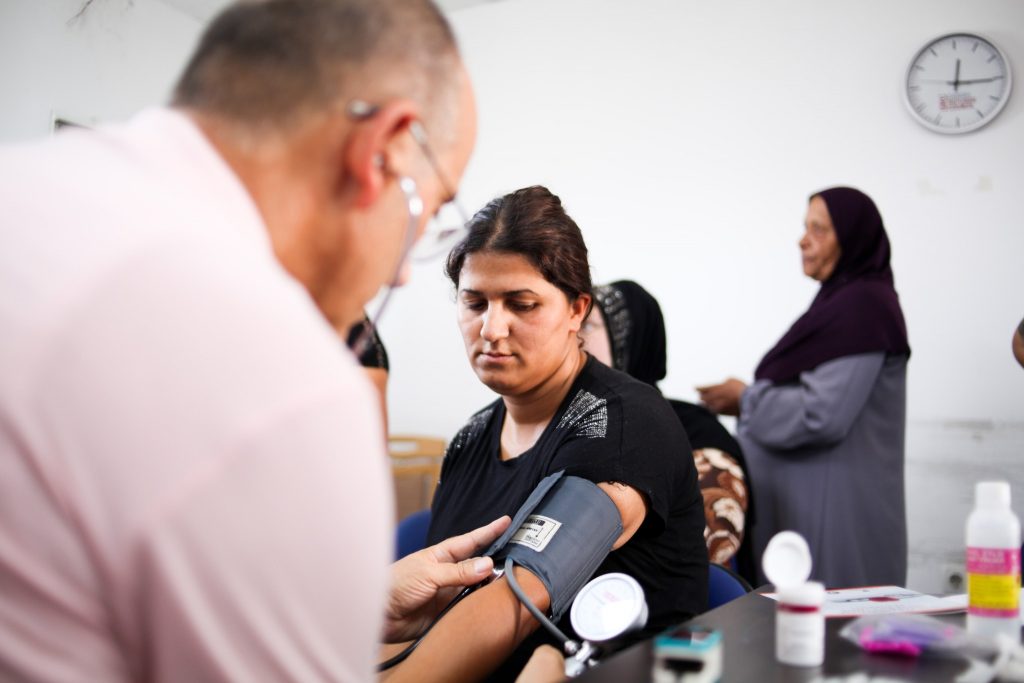
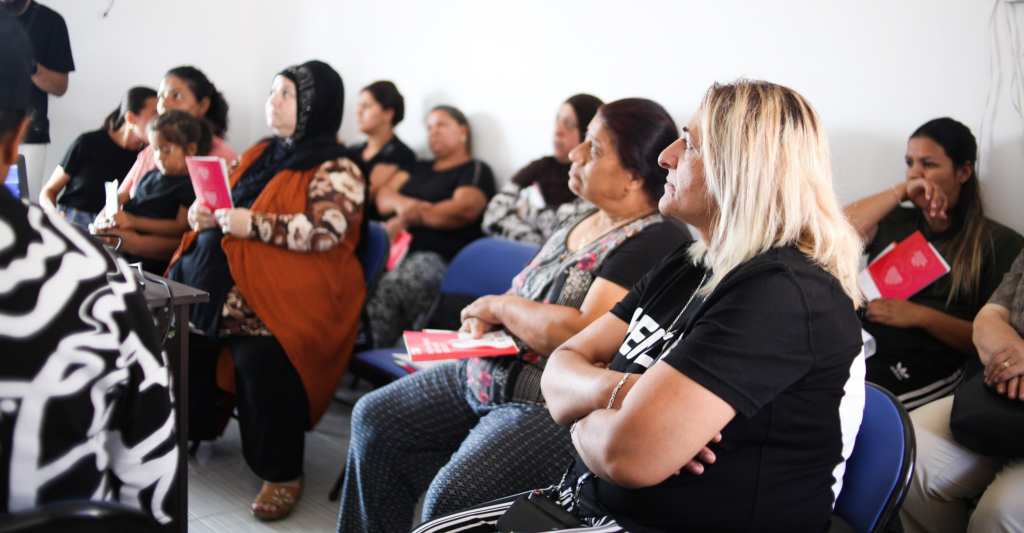
When residents of Vrellë gathered in their local community center one afternoon, few expected that a simple discussion on diabetes would lead to such an eye-opening realization.
Among the participants was A.M, 37 years old, who listened closely as health educators described the early signs of diabetes.
“The symptoms of diabetes, which I now understand better, were things I had never recognized as signs of something more serious,” A.M said. “This session has truly opened our eyes and made us more aware of how important it is to recognize warning signs early.”
As part of the ongoing efforts of the AQH Project to bring health education and promotion closer to communities, awareness raising sessions on non-communicable diseases (NCDs) are being supported alongside the Health Caravan “përSHËNDETje.” Only in September, 7 such sessions were organized across Obiliq, Shtime, Istog, Peja, Mitrovica, Skenderaj, and Kamenica, reaching more than 180 citizens. The sessions will continue to take place for the rest of 2025 as well. Implemented by OJQ Mundësia, KOPF, and Syri i Vizionit, the initiative focuses on increasing understanding of diabetes, hypertension, and asthma, three chronic conditions that often go unnoticed until they become serious.
Raising awareness about NCDs is of the utmost importance for public health. According to WHO’s new Global Hypertension Report, 1.4 billion people had high blood pressure in 2024, yet only one in five have it under control.
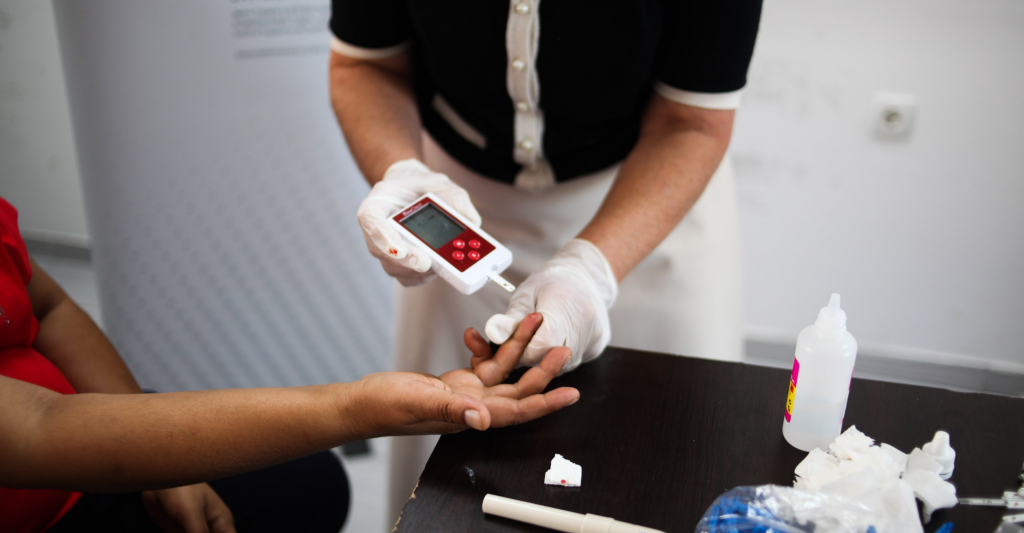
Held in familiar community spaces, these gatherings offered much more than information. They created moments of connection where people came together to learn, ask questions, and share personal experiences, from symptoms they had once ignored to small lifestyle changes that could make a lasting difference. Participants also had the chance to check their blood pressure and blood sugar levels, as well as learn how to do it at home, helping them take a more active role in protecting their health.
“Through these sessions, citizens gain knowledge that helps prevent diseases and improve their quality of life,” said a representative from KOPF. “These meetings are an opportunity to build a healthier and more aware community.”
In rural areas, where access to health information is often limited, such efforts are particularly valuable. Representatives from Syri i Vizionit emphasized that these initiatives help citizens recognize symptoms early, understand the risks of neglect, and take preventive measures for better health outcomes.
“Information sessions help people recognize symptoms in time, understand the consequences of carelessness, and motivate them to take preventive measures for a healthier life,” noted Syri i Vizionit. “It is especially important that these sessions take place in rural areas, where people may not always have access to reliable health information or realize the seriousness of these diseases.”
By bringing knowledge directly to communities, initiatives like these are helping people take charge of their health.
The AQH Project’s health education and promotion activities over the years have reached up to 30,000 citizens, including over 17,000 women, 12,000 men, and 7,800 members of non-majority ethnic communities.