


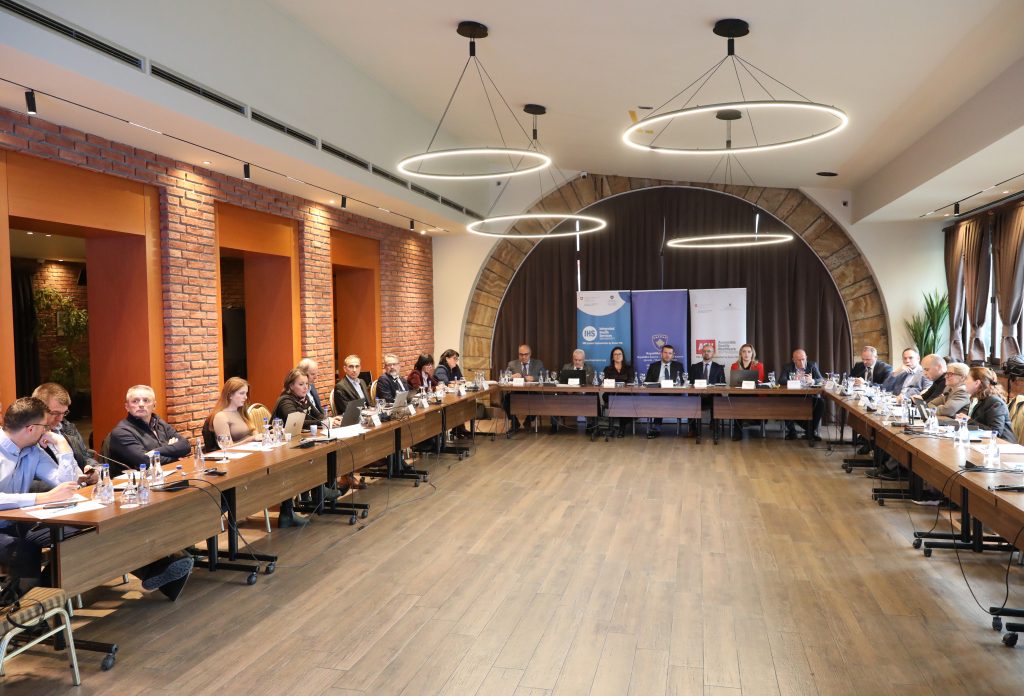
On Tuesday, December 2, 2025, the Municipality of Peja welcomed the Steering Committees of the Accessible Quality Healthcare (AQH) and Integrated Health Services (IHS) projects for the first joint meeting to review progress and 2026 priorities . With both projects strengthening care for pati ents with non-communicable diseases (NCDs), the meeting offered a close-up look at how the two SDC-funded projects are improving the quality of care across primary and secondary levels in Kosovo
Co-chaired by the Ministry of Health (MoH) and the Swiss Agency for Development and Cooperation (SDC), the gathering brought together also the representatives from the National Institute of Public Health of Kosovo, Kosovo Hospital and University Clinical Services, General Hospitals of Peja and Gjakova, Lipjan, AQH demonstration site, the Patient Rights Association of Kosovo (PRAK), Chambers of Nurses along with project implementation teams . Together, they reviewed progress, aligned priorities, and discussed how both projects can continue supporting Kosovo’s health system as it evolves.
Field Visit in the Primary and Secondary Healthcare Institutions
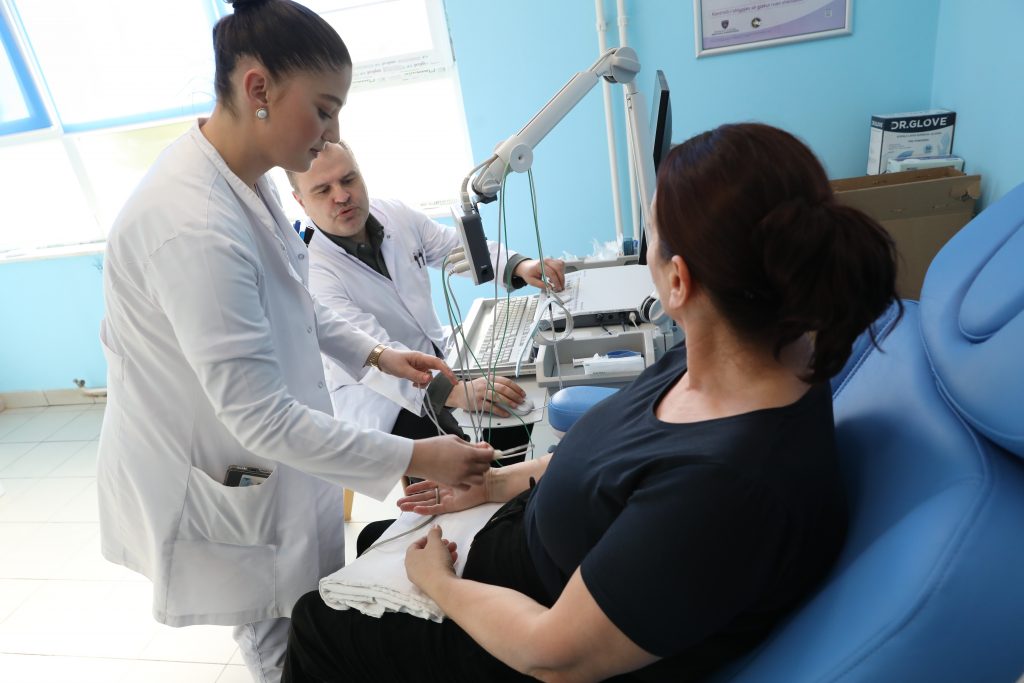
The daylong meeting began with a field visit at the Regional Hospital of Peja, where IHS supported interventions, aimed at improving service quality at secondary care, were presented.
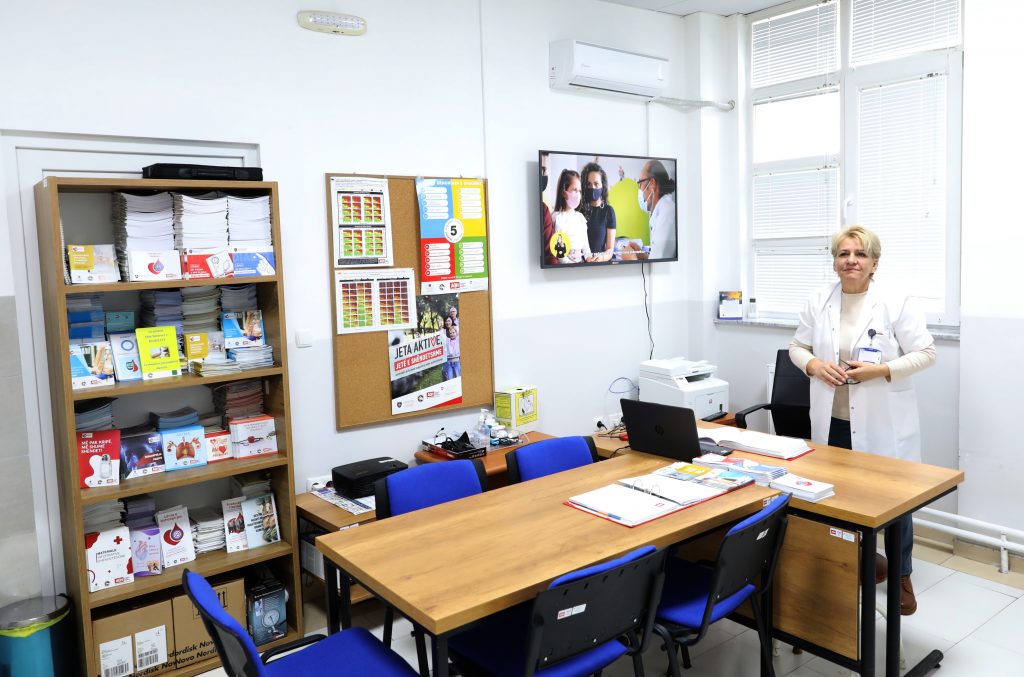
The group then moved to the Main Family Medicine Center (MFMC) Peja, where AQH supported improvements in infrastructure, service delivery, health education and promotion activities were showcased, highlighting how strengthened primary care directly supports NCD patients and reduces pressure on higher levels of care.
Aligning Efforts and Looking Ahead
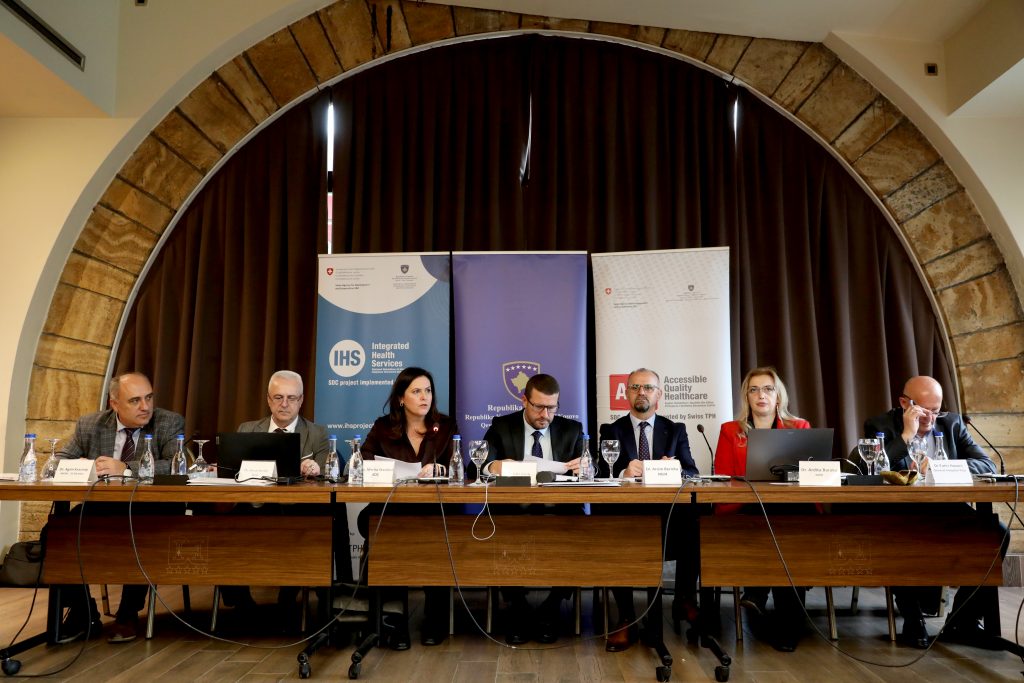
After the Steering Committees groups and invitees had the opportunity to observe first-hand the interventions that supported the improvement of quality of care, they moved on to a formal meeting to discuss current progress and coordinate 2026 priorities.
Discussions emphasized the strategic priorities of the Ministry of Health, the continued improvement of service quality, and the importance of integrating patient voices and patient- centered care across all levels of health service delivery.
Opening the meeting, Merita Stavileci, Senior Programme Officer at Swiss Cooperation Office, emphasized the value of bringing both committees together:
“We combined the field visits to see how the two projects coordinate, create synergy, and where primary and secondary care intersect.”
She noted that progress in Peja reflects strong cooperation between the projects, Ministry of Health, and the Municipality.
Arsim Berisha, Deputy Minister of Health, expressed appreciation for the support Kosovo receives from the Swiss Agency for Development and Cooperation through both projects noting that it is helping improve the healthcare conditions in the country.
Meanwhile, Jahë Gecaj, Acting Secretary-General at the MoH, reaffirmed that both AQH and IHS interventions remain priorities for the Ministry, particularly the sustainability of their interventions.
After opening remarks, the meeting continued with Project teams presenting AQH and IHS Half- Year Progress Reports for 2025, updates on achievements and next steps.
From the patient perspective, Agron Bytyci, of PRAK highlighted the importance of patient voices in healthcare reform, calling for patient representatives to be included in relevant MoH working groups.
The joint meeting in Peja underscored a shared understanding: when primary and secondary care are integrated, the whole system becomes stronger and more focused on people’s needs.
AQH and IHS continue to build this connection, improving quality, strengthening capacities, and ensuring that patients, especially those with NCDs, receive better care across all levels while “Making Kosovo a Healthier Place.”